|
Incorporated
in 1836, Michigan City is a manufacturing center with products that
include air compressors, boilers, furniture, and clothing. A historic
state prison and a U.S. Coast Guard station are also here.
The city, located near Indiana Dunes National
Lakeshore, is a summer resort and yachting center. Other recreational
amenities include a zoo and Lighthouse Place, a large shopping center
located on the former site of John Barker's Pullman car manufacturing
complex, just a few blocks away from the historic downtown area. Most
of the factory buildings burned down years ago, but two original
buildings remain and have become part of the popular outlet center.
The community was settled in the early 1830s and
named for Michigan Road (a route linking the Ohio River with Lake
Michigan), of which it was the Northern terminus. During the 19th
century it was an important grain- and lumber-shipping port. Pop.
(1980) 36,850; (1990) 33,822.
Michigan City is home to a fair amount of historic
architecture, but it desperately needs preservation programs and
historic district legislation to preserve its important historic and
architectural heritage.
Photos by Tim Arends
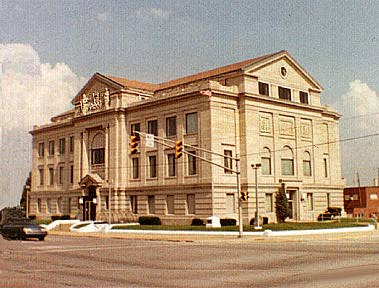
City Hall
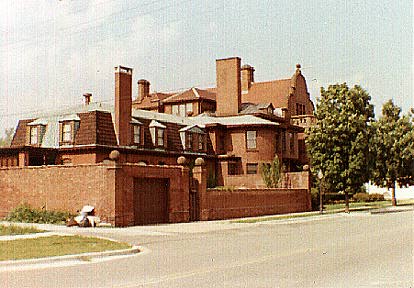 Barker Mansion
This stately residence, designed by Chicago
architect Frederick Perkins, was built in 1900-1905 for John H. Barker,
freight car industrialist. The mansion overlooked a massive Pullman car
manufacturing compound. Now a museum, this 38-room English manor-style
home is filled with original furnishings, imported art objects, rare
woods and imported marble. This mansion is a must-visit at
Christmastime, when nearly every major room is decorated for the
holiday.
Call (219) 873-1520 for tour
information.
Barker Mansion
This stately residence, designed by Chicago
architect Frederick Perkins, was built in 1900-1905 for John H. Barker,
freight car industrialist. The mansion overlooked a massive Pullman car
manufacturing compound. Now a museum, this 38-room English manor-style
home is filled with original furnishings, imported art objects, rare
woods and imported marble. This mansion is a must-visit at
Christmastime, when nearly every major room is decorated for the
holiday.
Call (219) 873-1520 for tour
information.
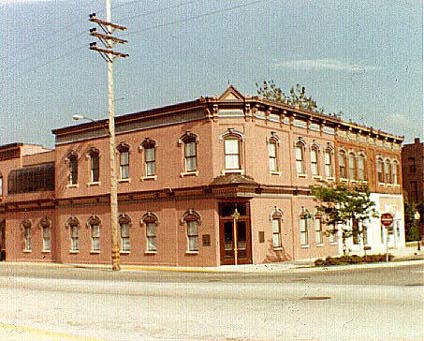 A beautifully maintained corner building.
Italianate.
A beautifully maintained corner building.
Italianate.
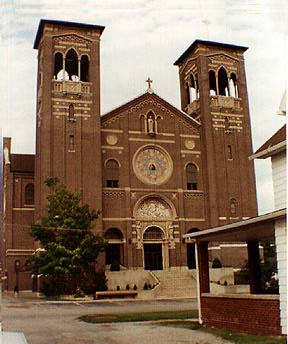 This church is a fine example of the Gothic
Revival style of architecture characterized by pointed arches and
ribbed vaulting. This broad style of architecture stemmed from a
movement of the 18th and 19th centuries aimed at reviving the spirit
and forms of Gothic architecture.
This church is a fine example of the Gothic
Revival style of architecture characterized by pointed arches and
ribbed vaulting. This broad style of architecture stemmed from a
movement of the 18th and 19th centuries aimed at reviving the spirit
and forms of Gothic architecture.
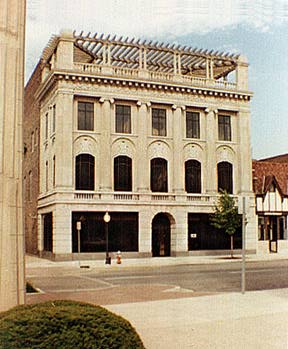 A bank building in downtown Michigan City of
unusual design,one of the original "green" buildings. The trellis at
the top of the building is an original
part of the design; its purpose was to allow vinelike foliage to grow,
forming a sort of rooflike canopy for the building.
A bank building in downtown Michigan City of
unusual design,one of the original "green" buildings. The trellis at
the top of the building is an original
part of the design; its purpose was to allow vinelike foliage to grow,
forming a sort of rooflike canopy for the building.
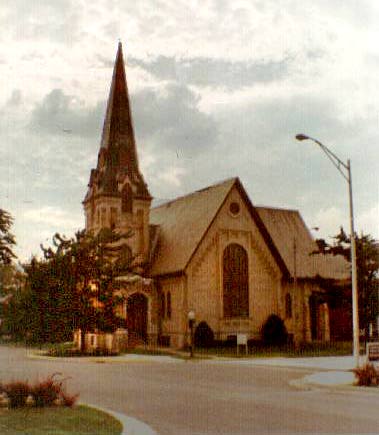 Italianate style church. Italianate,
fashionable in England and the U.S. in the 1840's and 1850's, is
characterized by low-pitched, heavily-bracketed roofs, asymmetrical
informal plan, square towers, and often, round-arched windows.
[ Home
| Images of Indiana
Architecture | Endangered
| Editorials
| Site Store
]
Italianate style church. Italianate,
fashionable in England and the U.S. in the 1840's and 1850's, is
characterized by low-pitched, heavily-bracketed roofs, asymmetrical
informal plan, square towers, and often, round-arched windows.
[ Home
| Images of Indiana
Architecture | Endangered
| Editorials
| Site Store
]
[10 Simple ways you
can help promote Historic Preservation! ]
|