Purchasing your books through this site helps us
pay our hosting costs.
Home
|
Categories
References
for this Site
Historic
Homes
Researching
Restoring
Buying
General References
Indiana Architecture
Architecture-General
Architects
Commercial Architecture
Preservation Funding
References for this Site
Historic Homes
Researching
Restoring
Buying
General References
Indiana Architecture
Architecture-General
Architects
Commercial Architecture
Preservation Funding
The Preservationist's Bookshelf
References for this Site
These are some of the books that were referenced in creating this site.
Purchasing your books and other items through this site helps us pay our monthly hosting fees.
Historic Preservation History and Theory - A List
Best Historic Preservation Resources
 Illustrated Dictionary of Historic Architecture
Edited by Cyril
M.Harris
Defined as the art and technique of building, architecture has been
employed for thousands of years to fulfill the practical and expressive
requirements of civilization.
In Illustrated Dictionary of Historic Architecture, noted Columbia University professor of architecture Cyril M. Harris offers a unique tour through the entire history of architecture: an extraordinary compendium of clear, concise definitions for over 5000 important terms. This thoroughly accurate and comprehensive gathering of architectural knowledge is complemented by an unprecedented collection of over 2000 line drawings that richly illustrate significant aspects of architectural styles. Unusual cutaway views, close-ups of intricate details and precisely rendered plans show many of the greatest architectural achievements of all time.
From ancient ruins to 20th-century Modernism the Illustrated Dictionary of Historic Architecture covers the full spectrum of architecture's rise and development.
The Illustrated Dictionary of Historic Architecture is an important research tool with particular emphasis on clarity and accuracy. For the architect, artist historian, student, teacher, or architecture enthusiast this valuable guide offers indispensable information and lucid illustrations covering the whole of architecture.
Dover (1983) unabridged and unaltered publication of Historic Architecture Sourcebook. Originally published by McGraw-Hill Book Co., New York, 1977. Preface. Over 5000 definitions. Over 2000 black-and-white line illustrations. ix + 581pp. 71/2 x 93/s. Paperbound. ISBN: 0-486-24444-X
Buy
it Now!
 What Style Is It?
"A HISTORY IN
MINIATURE OF ARCHITECTURE IN AMERICA."
American Institute of Architects
How many of the architectural styles on the front cover could you
identify? Unless you scored 100 percent and especially if you're in the
habit of labeling all old buildings either "colonial" or "Victorian, "
What Style Is It? will finally put to rest your questions about
American architectural styles. As the examples here clearly show, at
least two dozen major styles have shaped the buildings that surround
us. (And "colonial" and "Victorian" are not really styles, as the
authors explain.) But our buildings remain a mystery to many people.
When was it built? Why does it look that way? What style is it?
Questions such as these are answered in this portable guide to 300
years of American architecture. Now in a new edition designed for easy
identification of buildings on the road or at home What Style Is It?
gives a unique overview of America's architectural styles. Individual
chapters on 22 of the most important styles provide a concise look at
the history and appearance of each style.
"If you're confused by the differences between Stick and Shingle, or
Queen Anne and Italianate, you may need What Style Is It?, a
picture-and-prose handbook [that] strips away the mysteries of
architectural nomenclature."
Chicago Tribune
'American architectural styles aren't strictly American, and that's
where problems arise. American builders adapted Roman, Greek, Spanish,
English and Continental styles to produce some often impressive often
confusing examples of architecture.... The expected styles are here, of
course Georgian, Federal, Jeffersonian, Greek Revival, but so are a
host of lesser-known but often encountered ones. [The book has]
excellent photographs, careful descriptions and an easy-to-read,
flowing prose style." Southern Antiques
ISBN: 0-89133-116-6
Buy it Now!
 The
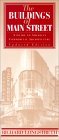
Buildings of Main Street
The
Buildings of Main Street
"This slim,
pocket-sized guide, with its many photographs and illustrations, should
be of value to anyone interested in identifying and enjoying the
architectural assets of a building....
"What Style Is It? concisely gives the details and design features
needed to identify a building's style. "
New York Times
'Anyone with the quest for discovering the details behind beautiful
buildings will find this book an en lightening experience."
Antique Monthly
Building
Watchers Series ISBN: 0-89133-126-3
Buy
it now!
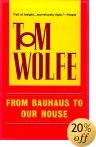 From Bauhaus to Our House
"HAS THERE EVER BEEN A PLACE ON EARTH WHERE SO MANY PEOPLE OF WEALTH AND POWER HAVE PAID FOR AND PUT UP WITH SO MUCH ARCHITECTURE THEY DETESTED?"
Tom Wolfe
It all started 50 years ago with the Bauhaus Boys, whose international
style of architecture made our office buildings into glass-and-steel
boxes, our art galleries look like garages and our schools look like
shopping centers!
'Wolfe's delightfully witty, biting history of modern architecture is a
scintillating high comedy of big money, manners, and massive
manipulation of public taste." - Publishers Weekly
"Sharp serpent's-tooth wit, useful
cultural insight and snazzy Zip! Pop! writing." - Playboy
"Full of insights...marvelously right." - People Magazine
130,000 copies sold in hardcover! A book of the month club selection
ISBN: 0-671-50659-5
Buy it now!
Anybody interested in Indiana historic preservation should have the
Lake County Interim Report
Indiana Historic Sites and Structures Inventory
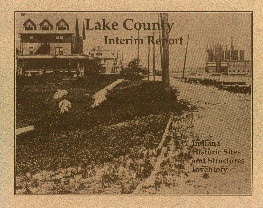
This 449 page compendium of historic sites in Lake County, Indiana contains descriptions and significance ratings of 8,590 homes, farms, commercial and industrial buildings and other sites of historic and architectural interest. In addition, there are hundreds of photographs of existing buildings throughout the county.
The report is the result of thousands of hours of surveying and interviewing by the Historic Landmarks Foundation of Indiana in cooperation with the Indiana Department of Historic Preservation and Archaeology. Loaded with maps and illustrations. Paperbound. ISBN 1-889235-00-8.
Order from:
Buckley Homestead, 3606 Belshaw Road, Lowell, IN 46356 Ph: (219) 696-0769
$25.00 + $3.00 shipping/handling per copy. Make check payable to Historic Landmarks Foundation of Indiana. Call for availability before ordering.
Home
General Reference
A
Field Guide to American Houses
by Virginia McAlester, et al
Nearby
History (Second Edition)
by David E. Kyvig, Myron A. Marty
A
Field Guide to American Architecture
by Carole Rifkind
Historic
Preservation
by Norman Tyler
Identifying
American Architecture
by John J. G. Blumenson, Nikolaus Pevsner
Books for Historic Home Owners
