Abandoned Structures of
Gary, Indiana
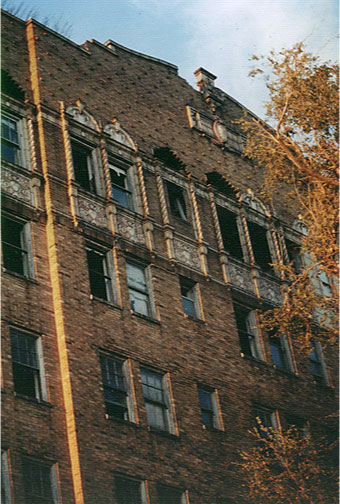
Ambassador and Mahencha Apartments
Pictures by Barbara Seibert
How sad
that, in this era of supposedly widespread homelessness, spacious
apartment buildings like these should lie vacant.
Mahencha
Apartments
Some time ago, the
author of this website received the following email:
I just recently
became interested in the beautiful buildings in Gary, and have spent
hours driving around looking at them. There is a lovely old apt
building on the corner of 5th Ave and Arthur Street that I spent about
an hour looking at yesterday, too. This building is falling apart and
seemed to beg me to stop and take a look. From the outside it looks
like perhaps 35-40 units with all the windows broken. The beautiful
tile roof now falling into the forth floor. The buildings around it are
still well maintained but this poor baby has been left to the elements.
I've enjoyed every
minute that I've spent looking through your web site. I surely hope
others will, too. The past couple days I've been trying to imagine what
I can do... I understand there are some plans for the Methodist Church.
This email was from
Barbara Seibert, a nurse from the Chicago Suburbs, who has taken an
active interest in Gary, Indiana and its people. She is the founder of Live
Up Art, Inc., located in Gary.
The building Barbara
was referring to was the Mahencha Building at 1900 W. 5th Ave. This
31-unit building is on the northwest corner of Fifth Avenue and Arthur
St., across from Horace Mann high-school. Former Gary Mayor Richard G.
Hatcher owned this building, and at least for a time, owed $20,923 in
back taxes on it, according to an Oct 1990 Post Tribune
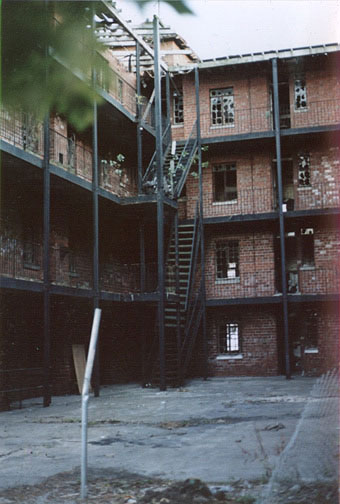
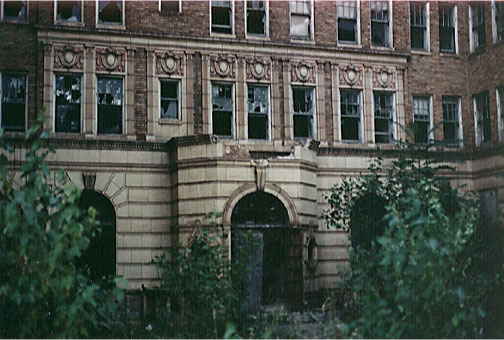
article. The building is vacant and boarded up. Broken glass and
bottles litter the grounds. Hatcher had purchased the property in 1978.
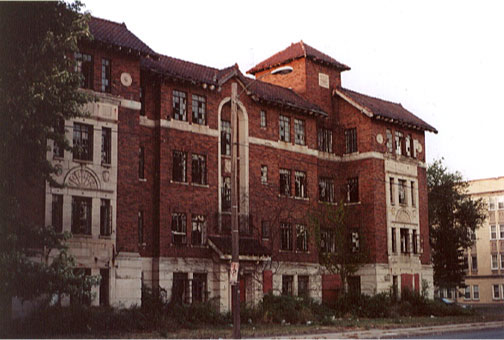
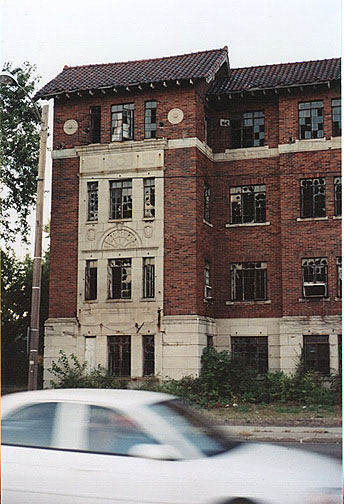
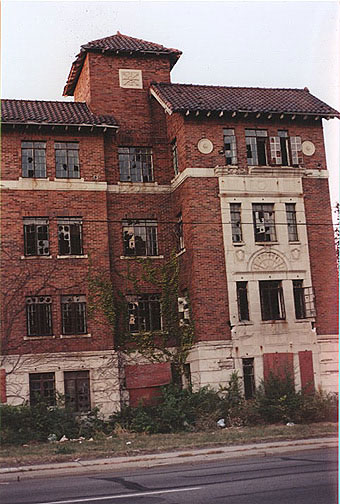
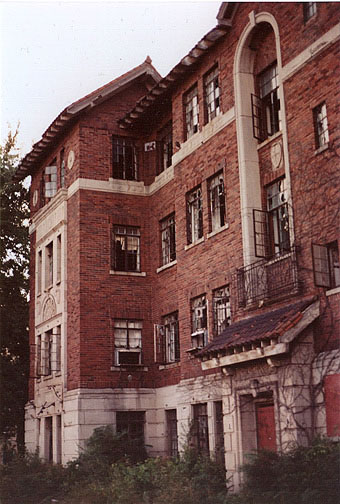
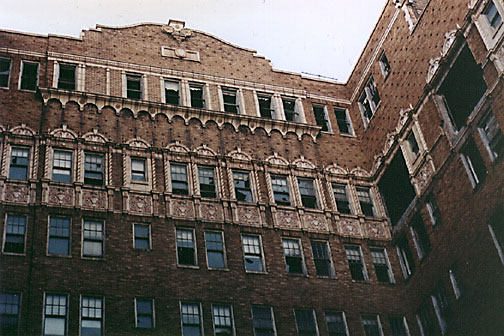
It is an imposing
building, clad in red brick with white terra cotta trim, canvas awnings
(at one time) and wrought iron balconies. It is asymmetrical with a
tower-like structure off on one side.
A Crown Point
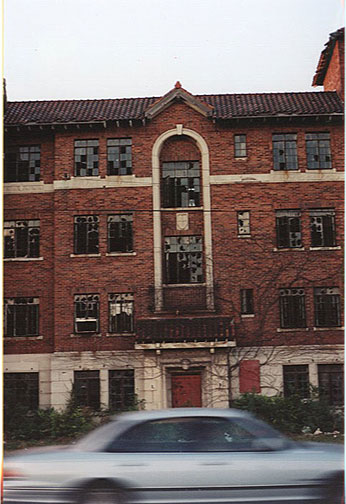
architect says it is a combination of styles. The curved, red clay roof
tiles show a southwest influence and the low-pitched hipped roof,
square tower and center stairway with an "eyebrow" above it are some
elements of the Italianate style.
At the time of the
Oct 1990 article, there was a public protest about the building, but as
is usual with Gary, nothing was done about it--Hatcher claimed it would
cost over $1 million to renovate it. At the time of the article it was
being used as a dope den, trash dumpster and flophouse for the
homeless. Very sad.
|