|
FORT WAYNE, Ind.
Indiana's second largest city. Only Indianapolis, about 130 miles
southwest, has more people. Fort Wayne, the seat of Allen Co., covers
about 58 square miles and lies at the Junction of the St. Joseph, St.
Mary's and Maumee rivers.
Though situated, like
most Indiana towns, in a farming region, Fort Wayne is a center for
motor-vehicle assembly and other manufactured goods. In fact, the Fort
Wayne area has about 450 manufacturing plants. Chief products include
machinery, electronic parts and equipment, trucks, and transportation
equipment. Major airlines and freight and passenger trains serve the
city. Electronic and electrical goods, automotive products, and diamond
tools are major manufactures. The city is also an important
distributing center of wholesale goods.
Fort Wayne is the
seat of Concordia Theological Seminary (1846), Saint Francis College
(1890), Fort Wayne Bible College (1904), Indiana Institute of
Technology (1930), Indiana University-Purdue University at Fort Wayne
(1964), and several junior colleges.
The city's strategic
river-junction location was the site of the chief village of the Miami
Indians and, from the late 17th century, of a French fort. Modern Fort
Wayne grew from a fort (now reconstructed) that was established in 1794
by Major General "Mad Anthony" Wayne, (for whom the city was named),
who defeated the Miami Indians, thus opening the area to settlement.
Industry grew after the construction of the Wabash-Erie Canal in 1840
and the arrival of the railroad in 1854. Fort Wayne was incorporated as
a city in 1840. Pop. (1990) 173,072.
A campus of Indiana
University-Purdue University is located in Fort Wayne. Other
institutions of higher education include the Indiana Institute of
Technology, St. Francis College, and a campus of Taylor University.
Fort Wayne's biggest tourist attraction, the Three Rivers Festival, is
held in July. The festival includes parades, historical displays, and
other events.
A number of
construction projects were completed in downtown Fort Wayne in the
early 1980's. They included an art museum, a botanical garden, a
convention center, and an office complex.
Historic Fort Wayne
is a reconstruction of an American army fort of 1816 in Fort Wayne.
Visitors can watch uniformed personnel carry out military activities of
the time inside the fort.
Several parks are
located along the Maumee. The grave of Johnny Appleseed (John Chapman)
is here. Museums include the Lincoln Library and Museum of the Lincoln
National Life Foundation, the Allen County-Fort Wayne Historical
Museum, the Museum of Art, and the Diehm Museum of Natural History.
The ornate Embassy
Theatre, a former movie palace, now hosts theatrical productions.
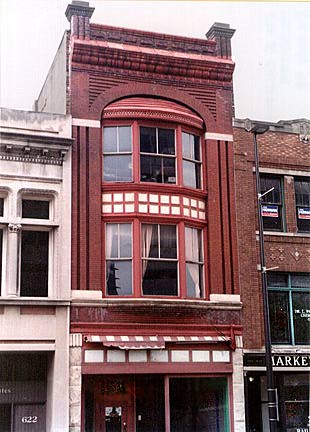
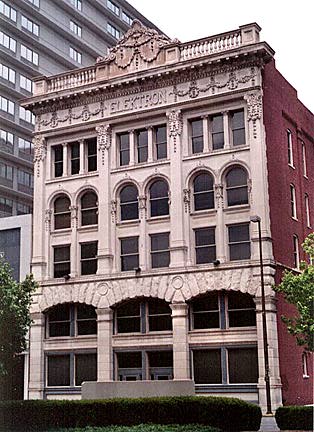
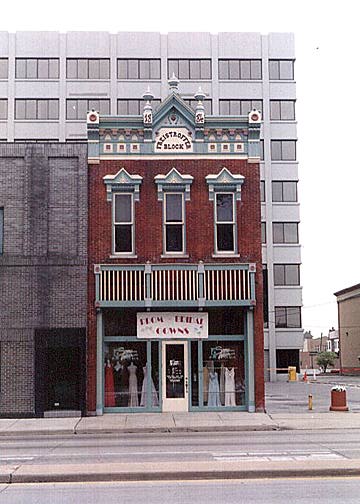
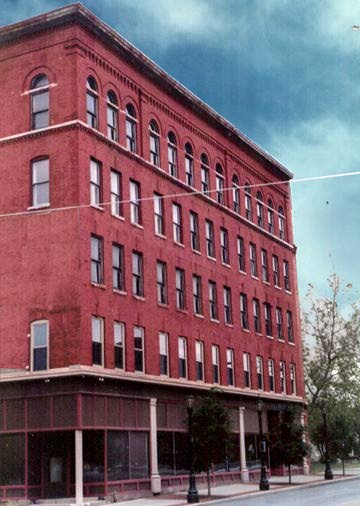
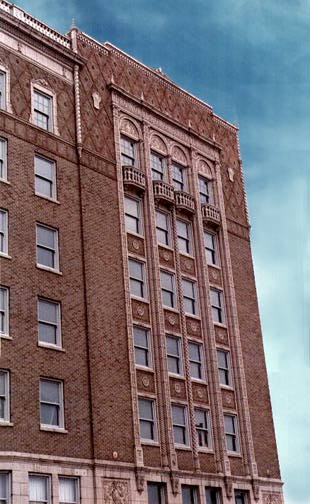
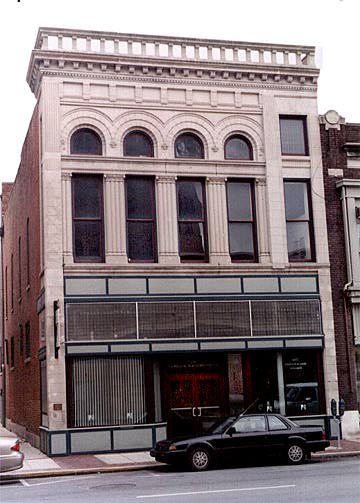
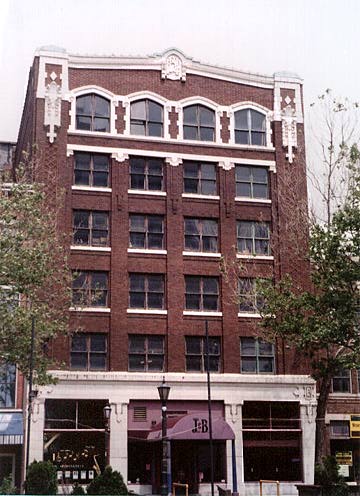
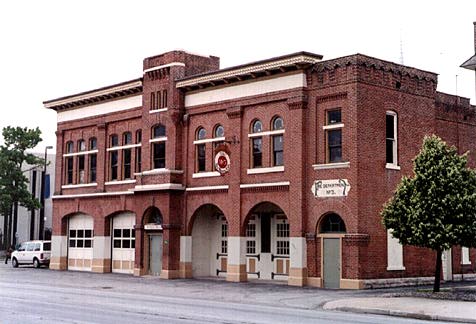
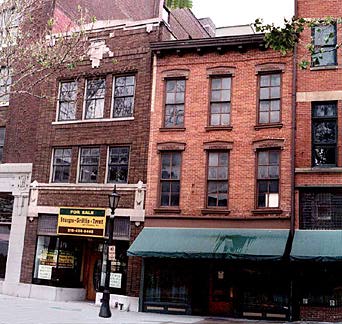
All pictures were
taken May 24, 1998.
|