|
|

|
|||||||||||||


  |
New Albany in
Vintage Postcards The scenic town of New Albany lies along the banks of the Ohio River, opposite Louisville, Kentucky. Founded in 1813 and incorporated in 1839, New Albany grew to be the largest city in Indiana by the mid-1800s. Its location below the falls of the Ohio River boosted shipping and boat-building and promoted the building of some of the city’s most notable residences, many of which still stand along Main Street. Through more than 200 vintage postcards, authors David C. Barksdale and Robyn Davis Sekula guide the reader on a tour of New Albany’s past. The images highlight the city’s early schools and churches and its first library. Others juxtapose flooding disaster and centennial celebration. (Click book image at left) |

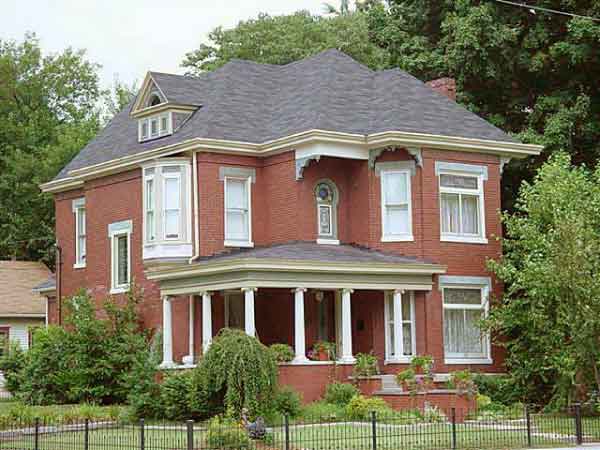
1109 East Spring Street

Brooks - Bradley House |
   |
Caring
for Your Old House: A Guide for Owners and Residents (Respectful
Rehabilitation Series) In this well-illustrated handbook, Judith Kitchen provides comprehensive advice and guidance for old-house owners on researching, repairing and maintaining an old residence to avoid making any irreversible changes to the historic integrity of the house. Potential old-house owners will find valuable recommendations on finding that old home. Included are inspection and maintenance tips with overviews on repairing problems in foundations, roofs, paint, mechanical and plumbing systems and other areas of the house. (Click image at left) |

Nunemacher-Hangary House Fashioned in the Gothic Revival style of architecture this home has had only three owners since 1853. The first two owners were John R. Nunemacher, owner of the City Bookstore at number 2 Main Street, and Jacob Hangary, one of the founders of the Merchants National Bank. It has a raised first story and delicate iron ornamentation. |

Peter Mann House |

607 East Main Street
 |
 About Your House (Bob Yapp) About Your House (Bob Yapp)Companion to the public television series, this practical guide helps the millions of owners of older homes maintain, renovate, and improve their homes. Recognizing that a home is most people's biggest investment, emotionally as well as financially, Bob Yapp helps you bring out the best in your home. Unlike most home improvement books that offer detailed advice on major projects that the average homeowner would never attempt, readers will find About Your House a refreshing new approach to everyday decisions that face those looking to keep their home beautiful, in excellent condition and within their budget. Each section of the book focuses on common repair and maintenance issues that confront the homeowner, with an emphasis on older houses. Yapp guides you on those projects you'll want to do yourself, when and how to hire a contractor, and performance standards for contractors. (Click above image) |
[10 Simple ways you can help promote Historic Preservation! ]