Historic Structures of
Lowell, Indiana
Commercial Avenue
Photos by Tim Arends
Primarily
a rural community, Lowell sprouted in the late 19th century in the
middle of miles of farmland. Named after the more famous town in
Massachusetts, Lowell was formally platted in 1853 but didn't really
begin growing until the arrival of the Louisville, New Albany and
Chicago Railroad ended its isolation in 1880. The town's early industry
consisted of a dam and sawmill and later, a small brick-making
operation taking advantage of the area's rich, clay-based soil. Two
early pioneering a entrepreneurs in Lowell were Melvin Halsted and O.
E. Haskins.
Lowell's commercial
district suffered a devastating fire in October 1898, but was rebuilt
in the few years following. Lowell today boasts several important early
20th century buildings in its downtown district and several buildings
that date back to the 1800s.
Like all American
communities, even small ones, Lowell has its modern sprawl and strip of
McDonald's, Burger King's and Walgreens. However, the town has been
fortunate to have a viable and sustained downtown district, even during
a period when many other rural communities saw a decline. Lowell also
has ready access to major highways that connect it to the rest of
northern Lake County, Indiana and even Chicago.
Lowell has an
enlightened attitude toward historic preservation. The Lowell Main
Street Association was formed to get the downtown area recognized for
its historic significance. Lowell applied for the area to be listed
both on the National Register of Historic Places and in the Indiana
Register of Historic Sites and Structures. The association realized
that having the downtown area on both registers gives the property
prestige and publicity and also protects it from damaging state and
federal construction projects. Most importantly, it permits investment
tax credits for improvements of historic income-producing buildings.
Daylene Welty,
co-chair of the old Main Street Association, is a shop owner on East
Commercial Avenue and an enthusiastic advocate of historic recognition.
"Being on the registry is a wonderful recognition," she is quoted as
saying in a March 18th, 2002 Post-Tribune article.
"You can still get a feel for the building's original construction, and
Lowell has the best collection I've seen. There's really no gaps in the
historic integrity," she said. The Main Street Association contracted
with a consultant to help with the application process.
An important thing to
understand about historic recognition is that if a building owner wants
to change his building completely there are no restrictions in being
listed on the National Register of Historic Places against doing so; he
just will not receive tax credits. In order to be eligible for the
credits, the work must be purely restorative and follow guidelines set
forth by the Historic landmarks Foundation of Indiana.
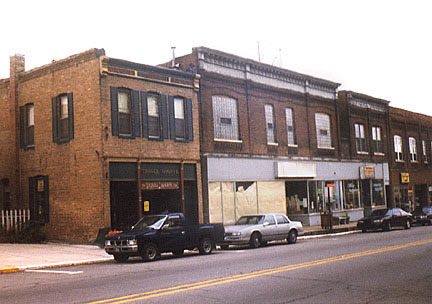
Commercial Ave., Lowell's
Main St., is still a hub of commercial activity
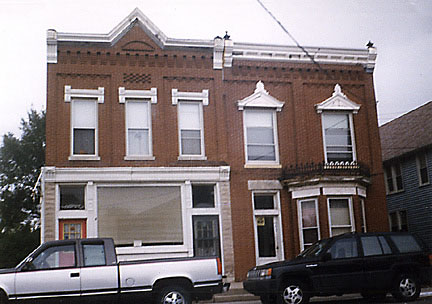
Storefront Building/Apartments
509 Main
Italianate
c. 1880
8-flat Apartment Building
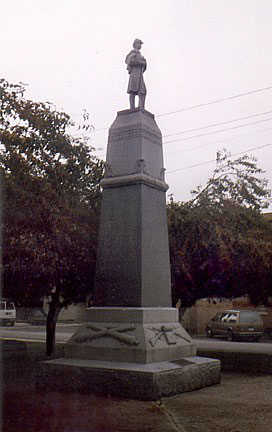 3-Creeks Monument
"Dedicated 1905 in honor of those who served in
the Civil, Mexican and Spanish-American Wars and the war of 1812 by the
women of Tri-Creek Lowell Women's Club, 1972"
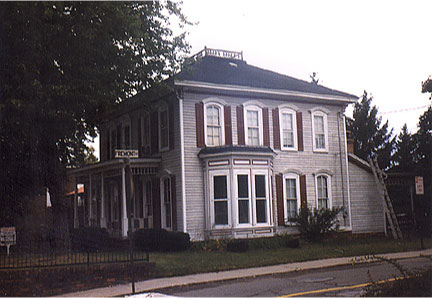
Bacon House
427 Main
Cast iron fence in front
Italianate
c. 1865
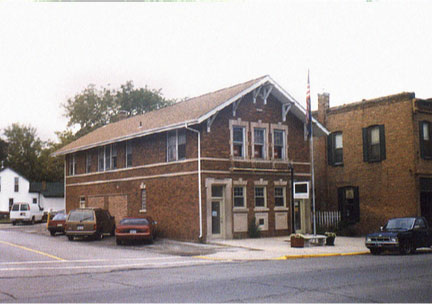
Lowell Chamber of Commerce Visitor's
Center
Formerly Lowell Town Hall and, for awhile,
the Lowell police station
1922
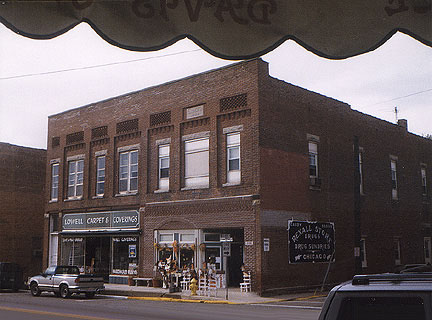
Storefront Building
Stone plaque: "Lowell Lodge KP No. 300")
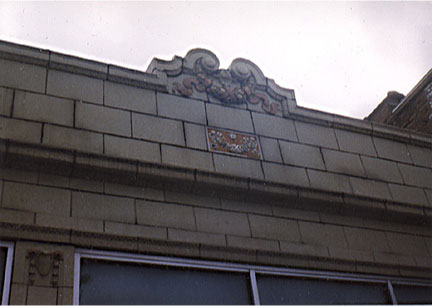
Terra Cotta close-up
308 Main
(Now a dentist's office)
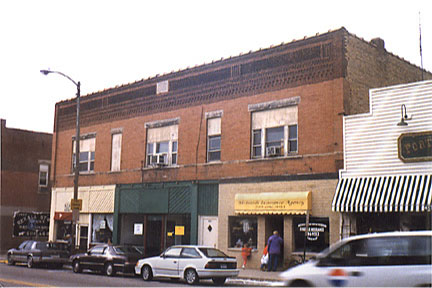
Lowell Lodge Building
One of three former Lodge buildings on the
same side of the street in downtown Lowell
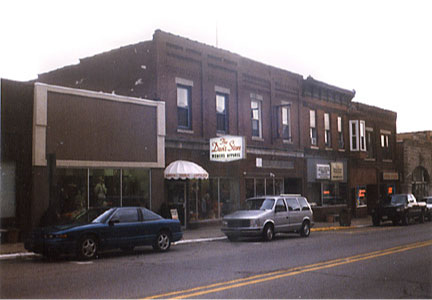
Another view of Commercial Ave.
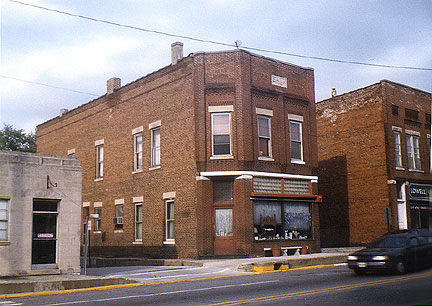
The stone marker at the top of this building
reads "BANK." According to Richard C. Schmal Lowell Historian, "the
building was built in 1900 as a bank; the restaurant there now uses the
old vault for a table or two--the old burglar alarm is still near the
large window in the front."
[ Home
| Images of Indiana
Architecture | Endangered
| Editorials
| Site Store
]
[10 Simple ways you
can help promote Historic Preservation! ]
|